A professional business website takes 4 to 8 weeks to design and build. A simple brochure site of one to five pages takes 1 to 2 weeks. A standard business site of five to fifteen pages takes 4 to 8 weeks. A small online store with fewer than fifty products takes 8 to 12 weeks, and custom web applications run to several months. The single biggest variable is not the developer. It is how fast content, feedback and approvals come back from your side.
Here is what actually happens week by week, and where projects lose time.
Website timeline by project type
| Project type | Realistic timeline | Pages | Typical cost in Australia |
|---|---|---|---|
| Landing page or one pager | 1 to 2 weeks | 1 | $2,000 to $6,000 |
| Small business site | 4 to 6 weeks | 5 to 15 | $8,000 to $25,000 |
| Larger corporate site | 6 to 10 weeks | 15 to 40 | $25,000 to $60,000 |
| Small online store | 8 to 12 weeks | Under 50 products | $15,000 to $50,000 |
| Custom web application | 3 months+ | Varies | $20,000+ |
Our own custom website builds run four to six weeks from kickoff to launch, starting at $12,000 ex GST.
The five phases, week by week
Every professional build moves through the same five phases. The names change between agencies. The work does not.
Phase 1: Discovery and strategy (week 1)
Before anything is designed, the agency needs to understand your business, your customers, what you sell and what the site has to achieve. This phase produces a sitemap, a content plan and agreement on what success looks like. Skipping it is the most common reason projects go sideways in week five.
What you provide: brand assets, access to analytics if you have it, and an hour or two of your time.
Phase 2: Design (weeks 1 to 3)
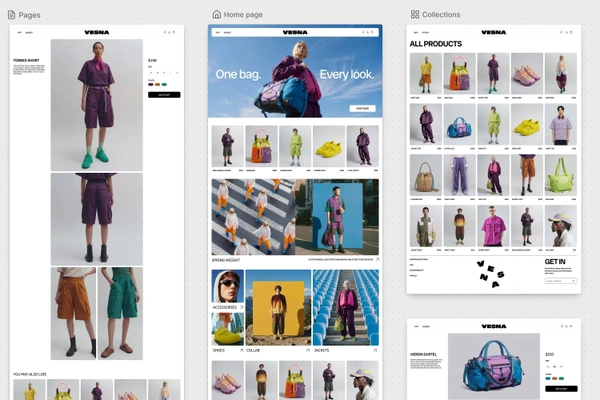
Homepage first, usually, then key internal templates. Good agencies design in Figma so you can click through a realistic prototype before a line of code exists. Expect one or two rounds of revisions here.
What slows this down: too many decision makers. If four people need to approve the homepage and they disagree, the design phase doubles. Nominate one person with final say.
Phase 3: Development (weeks 2 to 6)
Approved designs get built. On a modern stack this is faster than it used to be, and on an Astro build the resulting site has almost no JavaScript to slow it down. This phase also covers the content management setup so you can edit pages yourself afterwards.
Phase 4: Content and revisions (weeks 1 to 3, running in parallel)
This is where most timelines actually break. More on that below.
Phase 5: Testing and launch (about 1 week)
Cross-browser and cross-device testing, accessibility checks, performance tuning, redirects from old URLs, analytics, forms, then go live. Redirects matter more than people expect. Getting them wrong on a rebuild can cost you existing Google rankings overnight.
The real reason websites run late: content
Ask any agency. The design and the code rarely cause the delay. Waiting on content does.
A fifteen page site needs fifteen pages of copy, plus photography, plus team bios, plus product descriptions. If that has to be written by a business owner between client work, it takes months rather than weeks. We have had builds sit finished for six weeks waiting on an About page.
Three ways to avoid it:
- Write the content first, or at least in parallel with design, not after
- Pay a copywriter. On a $12,000 site, $1,500 of copywriting is the best money in the project
- Agree a content deadline in the timeline, with an agreed consequence if it slips
What else adds time
- Approval cycles. Each round of feedback adds days. Batch your comments into one list rather than sending them as they occur to you.
- Scope changes. “Can we also add a booking system” in week four resets parts of the timeline. Not unreasonable, just not free.
- Integrations. Anything that talks to another system, such as a CRM, booking platform or accounting package, can add one to three weeks depending on how good their documentation is.
- Migrations. Moving hundreds of existing blog posts or products takes real time.
- Custom illustration or photography. A photoshoot needs booking, shooting and editing. Start it early.
How to launch faster without cutting corners
- Have your content ready before design starts
- Nominate one decision maker with final approval
- Give feedback in batches, on an agreed schedule
- Lock scope before development begins, and park good ideas for version 1.1
- Choose a stack your agency knows well rather than the newest thing available
- Book your launch date backwards from a real event, such as a campaign or a trade show, so there is a reason to hold the line
Can AI build a website faster?
Partly. AI tools genuinely speed up boilerplate code, first-draft copy and some design exploration, and some teams now ship a twenty page site in about two weeks that would have taken four. What AI does not compress is the human part: agreeing what the site should say, getting sign-off, gathering photography and making judgement calls about your business.
So the honest answer is that AI has shortened the development phase more than it has shortened the project. That matches what we see. It is also why the State of CSS survey in 2026 found most developers still write their layout code by hand.
Frequently asked questions
How long does it take to build a website in Australia?
Most business websites take 4 to 8 weeks from kickoff to launch. A one page site can be done in 1 to 2 weeks and an online store usually takes 8 to 12 weeks.
Why do some agencies quote two weeks and others quote three months?
They are describing different products. A two week build usually means a template populated with your content. A three month build usually includes custom design, custom development, content production and integrations. Ask what is included rather than comparing the durations.
Can I get a website built in a week?
Yes, if it is a single landing page, the content is ready and the design is templated. For a full business website, a one week timeline almost always means corners cut somewhere you will pay for later.
What do I need to provide to keep the project on time?
Brand assets, written content for every page, images, timely feedback in batches, and one person empowered to approve. Content is the item that most often causes delay.
Does a website rebuild take longer than a new site?
Often yes, slightly. Rebuilds add content migration and URL redirect mapping, which protects the search rankings you already have. Budget an extra week for a site with significant existing content.
How long before a new website ranks on Google?
Ranking is a different timeline to building. A new site on an established domain can see movement in weeks. A brand new domain usually takes three to six months to build authority. Technical foundations laid at build time, such as speed and structure, shorten it. Our guide to website performance optimisation covers the technical side.
Planning your build
If you have a launch date in mind and want to know whether it is realistic, we are happy to sanity check it. We are a small studio in Byron Bay building sites for businesses across Australia, and our typical build runs four to six weeks.
Book a free 20 minute call and bring your deadline. We will tell you honestly whether it fits.
Sources
- Elementor, how long does it take to build a website in 2026: https://elementor.com/blog/how-long-does-it-take-to-build-a-website/
- Hostinger, how long it takes to create a website: https://www.hostinger.com/tutorials/how-long-it-takes-to-create-website/
- State of CSS 2026: https://2026.stateofcss.com/en-US