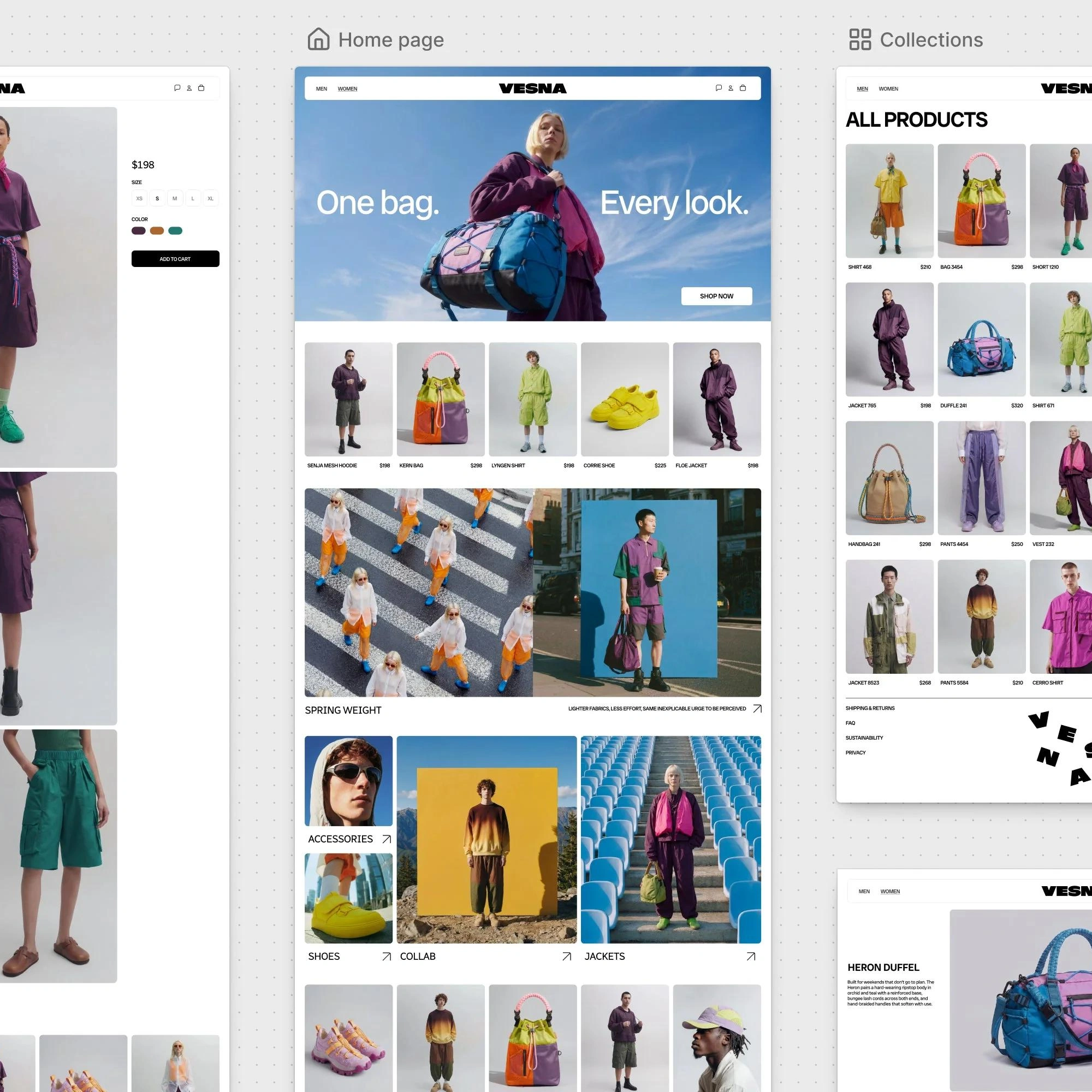
On 1 October, Shopify launched Canvas, an AI tool that lets merchants build a storefront by chatting with Sidekick, Shopify's AI agent. You describe the store you want, the AI makes the changes, and you watch the result appear in real time. Shopify says it takes roughly 20 minutes.
We build Shopify stores for small businesses, and our honest reaction is that this is good news. It is also worth being clear about what it changes, and what it does not.
What Canvas actually is
Canvas is a conversational site builder inside Shopify. Instead of choosing a theme and wrestling with settings, a merchant explains what they want and the AI builds it. No code is needed. The aim, in the words of Shopify's Ben Sehl, is to help more entrepreneurs get closer to the version of their store that exists in their head.
It launched alongside a tie in with Meta's new Muse AI agents for small business, which connect with Shop Pay to help drive customers to Shopify stores.
Why this is good for small businesses
Starting an online store has always had a hurdle at the front door. Getting a first version live meant either learning the platform or paying someone, before you knew whether the idea would sell. A tool that gets a decent first draft online in an afternoon lowers that barrier. For a new product or a side venture, that is genuinely useful, and we would rather see more people test ideas than sit on them.
What a fast build does not give you
A store that exists is not the same as a store that sells. The things that decide whether a visitor becomes a customer are not layout problems:
- Brand and positioning: why someone should buy from you rather than the next tab.
- Product data: clear titles, descriptions, images, variants and pricing that answer real questions.
- Speed and performance: slow stores lose buyers, especially on mobile.
- Tracking and analytics: knowing where sales come from so you can spend wisely.
- Checkout and trust: shipping, returns, payment options and the small details that reduce hesitation.
- Content and SEO: being found in the first place.
An AI can assemble a layout quickly. It cannot know your customers, your margins or what makes your business different unless someone with that judgement is steering it.
The part most people are missing: AI shopping agents
The bigger shift sits behind the headline. Shopify has also opened checkout to browser based AI agents, which can complete a purchase with the customer's authorisation. Shopify's president, Harley Finkelstein, has said AI tends to help smaller merchants most: in the second quarter, 75% of orders attributed to AI came from outside the top 100 product categories. Niche products can find the right buyer in a way keyword search often did not allow.
That is an opportunity, but it has a catch. AI agents do not admire your homepage. They read your product information. If your titles are vague, your attributes are missing or your descriptions are thin, an agent has little to work with, and a competitor with cleaner data gets the recommendation instead. Structured, accurate product data is quickly becoming as important as good design.
What this means for agencies
We do not think tools like Canvas make web designers redundant. They change what the job is. Layout work, the part that used to take hours, is becoming a commodity. What remains valuable is strategy, conversion thinking, performance, data quality, integrations and the judgement to know what to build and what to leave out.
That is where we focus at TALKK. We will happily work with a store that started life in an AI builder and help it grow into something that actually performs.
What we would do this week
If you run a store, or you are thinking about starting one:
- Try Canvas if you are starting from scratch. A quick first draft costs you very little.
- Audit your product data. Check titles, descriptions, images and attributes across your catalogue.
- Check your speed on mobile before you spend anything on traffic.
- Make sure tracking is set up properly so you can see what is working.
- Ask whether your checkout builds trust, or creates doubt.
Want a second opinion on your store?
If you would like someone to look over your Shopify store, whether it was built by hand, by a template or by AI, get in touch with TALKK Web Design. We are based in Byron Bay and work with small businesses and startups across Australia.
Sources
- MediaPost: Shopify Unveils Commerce Site Creation Tool, Integrates Meta
- MarketingProfs: AI Update, October 02, 2026