


Web platforms
Web platforms built to hold up
Websites with logins, portals, dashboards and MVPs in Next.js, from brief to real users, in code and accounts you own.
- Happy Travels
- Son Of Earth Northern Rivers NSW
- Konpak Tiny Homes Australia
- Brookfarm Byron Bay
- Moonshine Coffee Byron Bay
- Find Creatives
- Jase Sullivan Interior Design
- Klammer
- Flim video productions
- Caffesso Gourmet Coffee
- AUNA
- NEST Apartments












Why build it with me
Every screen and state is designed before I code it, the tools are ones your next engineer already knows, and the platform keeps working after the demo.
Is a web platform right for you?
A platform pays off for some sites, not all of them.
It's worth the extra code once the site has to do things, not just show things. This is how I decide.
Web platformsThis pageBest for: Logins, portals, dashboards and MVPs, or code shared with a React product
- Who edits pages
- Your team, in Sanity or Payload; app screens change with the code
- Starting price
- From $15,000
- Time to launch
- 6 to 10 weeks
- Upkeep
- Package updates, plus any server code it runs
- Logic and data
- Sign-in, payments, APIs and server routes, with Supabase or Convex
- Hosting
- Vercel or Cloudflare, in your account
WordPressBest for: Teams who already know wp-admin, or rely on its plugins
- Who edits pages
- Your team, in wp-admin with Gutenberg or Bricks
- Starting price
- From $8,000
- Time to launch
- 4 weeks
- Upkeep
- Core, theme and plugin updates to keep on top of
- Logic and data
- Forms and plugins
- Hosting
- Managed WordPress hosting
AstroBest for: Marketing sites, blogs and docs where every visitor sees the same pages
- Who edits pages
- Your team, in Sanity or Payload with a live preview
- Starting price
- From $12,000
- Time to launch
- 4 to 6 weeks
- Upkeep
- Static pages, so there's almost nothing to patch
- Logic and data
- Forms and APIs; logged-in areas move to a web platform
- Hosting
- Vercel or Cloudflare, in your account
ShopifyBest for: Brands selling products online, with checkout and payments handled by Shopify
- Who edits pages
- Your team, in the Shopify admin, with sections set up for the pages you change most
- Starting price
- From $12,000
- Time to launch
- 5 to 8 weeks
- Upkeep
- Shopify looks after the platform; the app list stays short so the store stays quick
- Logic and data
- Products, checkout and payments run on Shopify; apps and integrations cover the rest
- Hosting
- Hosted by Shopify, on a monthly Shopify plan billed by Shopify
| Compared on | WordPress | Astro | Shopify | Web platforms |
|---|---|---|---|---|
| Best for | Teams who already know wp-admin, or rely on its plugins | Marketing sites, blogs and docs where every visitor sees the same pages | Brands selling products online, with checkout and payments handled by Shopify | Logins, portals, dashboards and MVPs, or code shared with a React product |
| Who edits pages | Your team, in wp-admin with Gutenberg or Bricks | Your team, in Sanity or Payload with a live preview | Your team, in the Shopify admin, with sections set up for the pages you change most | Your team, in Sanity or Payload; app screens change with the code |
| Starting price | From $8,000 | From $12,000 | From $12,000 | From $15,000 |
| Time to launch | 4 weeks | 4 to 6 weeks | 5 to 8 weeks | 6 to 10 weeks |
| Upkeep | Core, theme and plugin updates to keep on top of | Static pages, so there's almost nothing to patch | Shopify looks after the platform; the app list stays short so the store stays quick | Package updates, plus any server code it runs |
| Logic and data | Forms and plugins | Forms and APIs; logged-in areas move to a web platform | Products, checkout and payments run on Shopify; apps and integrations cover the rest | Sign-in, payments, APIs and server routes, with Supabase or Convex |
| Hosting | Managed WordPress hosting | Vercel or Cloudflare, in your account | Hosted by Shopify, on a monthly Shopify plan billed by Shopify | Vercel or Cloudflare, in your account |
Not sure which fits? Tell me about your project and I'll recommend one.
The process
From an idea to a platform people use.
Most platforms take 6 to 10 weeks. A site with a logged-in area can launch sooner; payments, roles and integrations add time. You see working software early and sign off each stage.
- DiscoveryWeeks 1 to 2
Discovery
- User flows
- Version one scope
- First draft of the data
- Fixed price and dates
- DesignWeeks 2 to 3
Design
- Wireframes
- Every screen designed
- Clickable prototype
- Your sign-off
- BuildWeeks 3 to 8
Build
- Next.js app
- Sign-in and roles
- Admin area
- Payments and integrations
- TestWeeks 8 to 9
Testing
- Testing
- Bug fixes
- Permission checks
- Speed pass
- LaunchWeek 10
Launch
- Launch
- Error alerts
- Handover notes
- Plan for what's next
Case study
A marketplace built on Next.js.
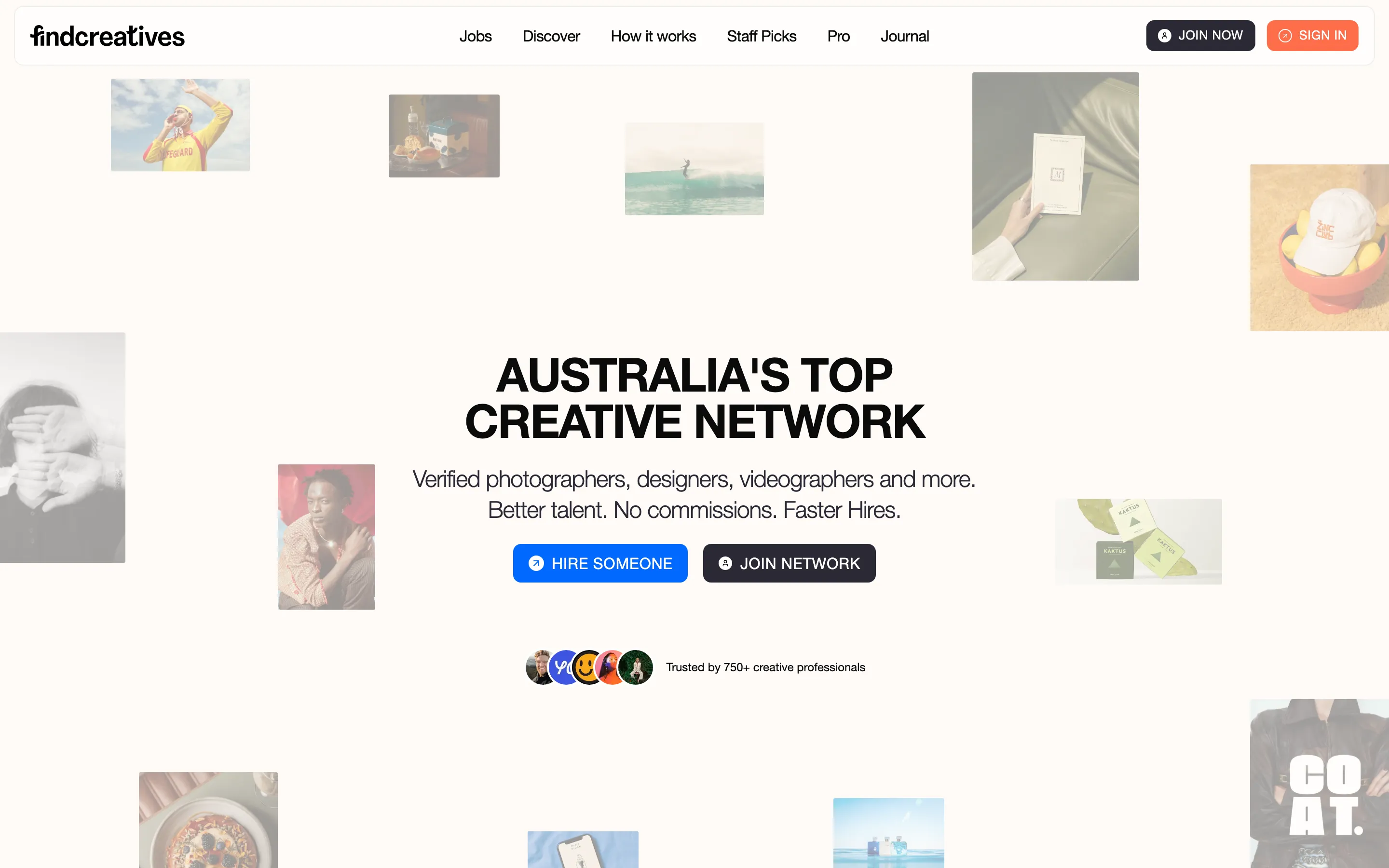
Find Creatives connects creative professionals with the businesses hiring them.
Next.js and Supabase
Find Creatives
A marketplace web platform built end to end: listings, profiles, search and a jobs board, with accounts and an admin area behind it.
Next.js
Listings, profiles, search and a jobs board
Supabase
Accounts, database and admin behind it
The problem
Creatives and the businesses hiring them had no single place to find each other, so the work happened across scattered directories and inboxes.
What I built
A full marketplace: listings, profiles, search and a jobs board, with accounts and an admin area, from the data model to launch.
Home 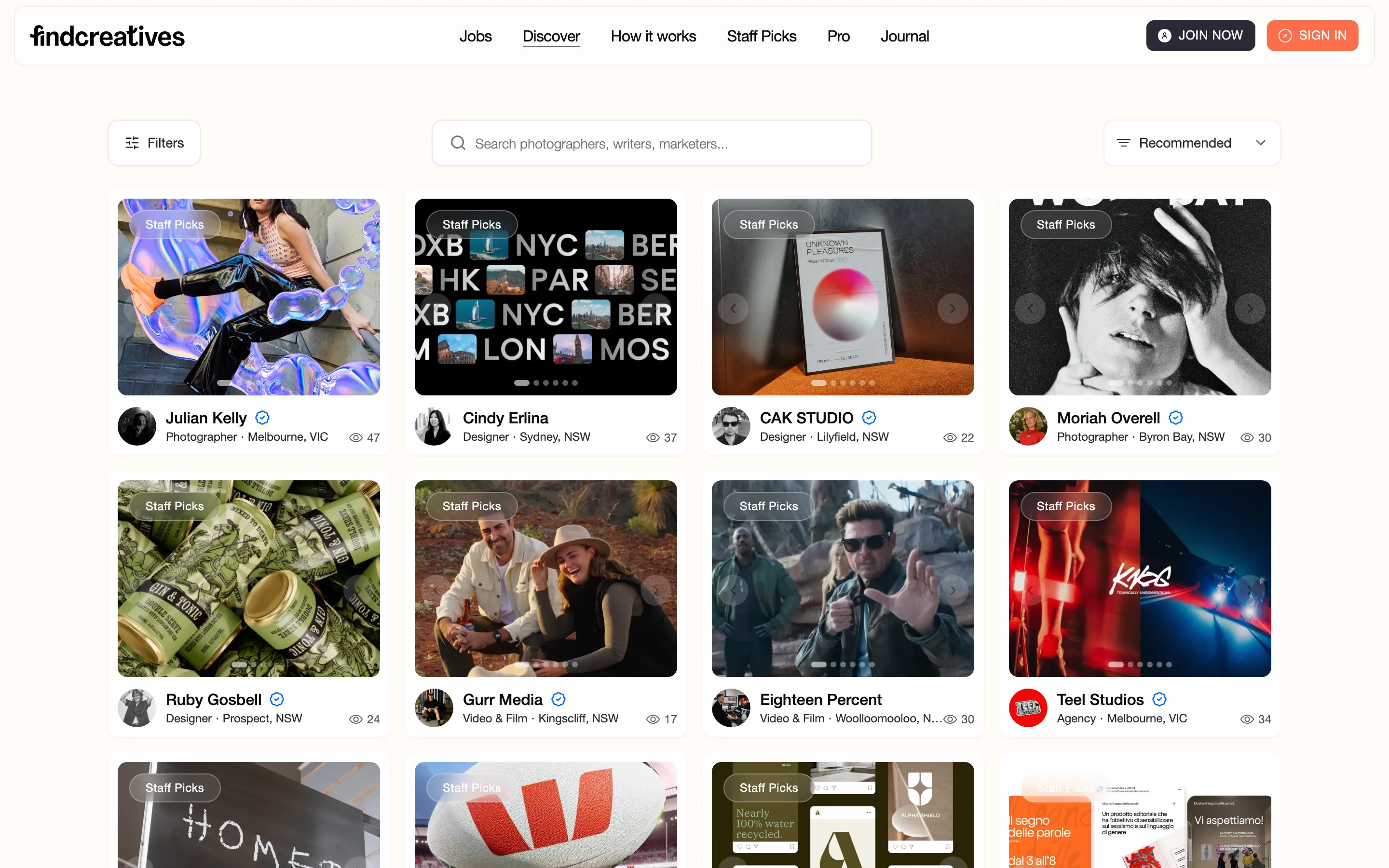
Discover
What you get
A working platform, in code and accounts you own.
A Next.js build on your own hosting, with a CMS your team can use and written notes any developer can follow.
Discovery and scope
Product design
Full stack build
Accounts, roles and admin
Headless CMS
Payments and integrations
Testimonials
What clients say about working with me
“I've worked with Nico on a few projects and cannot recommend him enough. Amazing attention to detail and extremely easy to work with.. I would 100% use his services again !”
Udai Singh
“Worked with Nic on a recent website project and his work is best in class. Quick communication, easy to work with. Highly recommend!”
Cassandra Michler
“Highly recommend Nico and the team at TALKK! The mobile app we built is better than I thought it could be - Nico is sharp, reliable and delivers quality!!”
Adam Wright
“Nico and the team at TALKK did an outstanding job on our consulting company's website. Their communication was excellent throughout and they took the time to truly understand our vision and made thoughtful recommendations based on it. The end result is a polished, professional website that has received fantastic feedback from everyone who has seen it. Highly recommend!”
Lisa Willard
“Nic developed an app for me, and the entire process was smooth from start to finish. He was incredibly helpful, responsive to my needs, and communicated clearly throughout the project. I'm extremely happy with the final product and the overall experience. I'm very grateful to have had Nic as part of this project and would highly recommend him to anyone looking for a skilled and reliable developer.”
Natascha Krauss
“TALKK Web Design Studio are fantastic to work with. Exceptional communication and unique web design solutions. Highly recommend.”
Aaron Chapman
“Nico is honestly the best developer I have ever worked with. Great design eye, always delivers work above and beyond. Thanks mate.”
Ryan Baldwin
“Nicolas at Talkk took over my old website designer and has it was such a smooth transition completely updating it and making it run so smoothly. Such a great person to deal with. I would highly recommend using his services.”
jase sullivan
Tools
The tools behind my web platforms.
Next.js, React and TypeScript at the core, with well-documented tools your next engineer already knows.
Framework
- Next.js
- React
- TypeScript
- Tailwind CSS
Data and auth
- Supabase
- Postgres
- Neon
- Convex
Content and payments
- Sanity
- Payload
- Stripe
- REST and GraphQL APIs
Hosting and workflow
- Vercel
- Cloudflare
- Figma
- Claude Code
FAQs
Web platform questions, answered
What is a web platform?
A website that does things for its users: they sign in, see their own data, book, buy, upload or manage something. Customer portals, membership sites, booking systems, dashboards and SaaS MVPs are all web platforms.
What does it cost?
Web platforms start from $15,000 and usually take 6 to 10 weeks. The final price depends on the flows, roles and integrations. Send me a brief and you get a fixed scope and price within two business days.
When do I need a platform instead of Astro or WordPress?
When the site has to do more than show pages: logged-in areas, dashboards, calculators, deep integrations, or content that changes per user. If Astro or WordPress covers what you need, I'll say so.
Should I build custom or use an off-the-shelf tool?
If a subscription already does the job and you're happy to work the way it works, use it. Custom is worth it when nothing off the shelf fits your process, or when you need real users, roles and payments you control.
Which tools do you build with?
Next.js with React and TypeScript by default, and Supabase, Neon or Convex for the data. SvelteKit is an option if your team already works in it. I explain the choice when I reply to your brief.
Which CMS do you use?
Usually Sanity or Payload. Sanity if you'd like it hosted for you; Payload if you'd rather keep everything on your own hosting and database, since it runs inside the Next.js app. Your team publishes in the CMS and the site updates, usually without a rebuild.
Do you clean up MVPs built with AI tools?
Yes, as a separate service: AI MVP cleanup. I review what you built with Cursor, Lovable, Bolt or v0, then keep, refactor, redesign or rebuild each part.
Can you work with our developer or in our existing codebase?
Yes. I review what's there first, agree with you what to keep and what to rebuild, and follow your conventions and review process.
Who owns the code and the data?
You do. The code, database, hosting and every outside account are in your name from day one.
What happens after launch?
You get 30 days of fixes. After that, ongoing work is quoted separately.
Available for projects
Let's work together
Have a project in mind? I'd love to hear about it. Let's get it built together.
hello@talkk.com.au